
Running an e-commerce business today is no longer just about having a great product or a visually appealing store. Customer acquisition costs are rising, paid ads are becoming less predictable, and shoppers trust people more than promotions. This is exactly where affiliate marketing for e-commerce businesses has emerged as one of the most sustainable and performance-driven growth channels.
Affiliate marketing allows online stores to scale through partnerships instead of ad spend. Rather than paying upfront for clicks or impressions, brands reward affiliates only when real sales happen. When done right, this model creates a powerful ecosystem where creators, publishers, and niche experts act as independent revenue engines for your store.
But affiliate marketing is not a plug-and-play tactic. Without the right structure, partners, and strategy, many e-commerce brands struggle with low-quality affiliates, poor attribution, and limited growth. That’s why successful brands approach affiliate marketing as a long-term system, not a quick win.
In this guide, Visiblica breaks down how affiliate marketing works specifically for e-commerce, why it outperforms many traditional marketing channels, and how brands can build a scalable affiliate program that drives consistent, trust-based revenue.
What Is Affiliate Marketing in E-Commerce (Beyond the Basic Definition)
At its core, affiliate marketing is a performance-based model where an e-commerce business partners with third parties to promote its products and only pays when a sale or desired action is completed. But for modern e-commerce brands, affiliate marketing is far more than just referral links and commissions.
In an e-commerce context, affiliate marketing works as a distributed sales system. Affiliates such as bloggers, creators, review sites, niche influencers, and industry experts promote your products using unique tracking links. When a customer clicks that link and completes a purchase, the sale is attributed to the affiliate, and a commission is paid.
What makes affiliate marketing for e-commerce unique is its alignment with buyer intent. Unlike paid ads that interrupt users, affiliate content usually appears at the exact moment a customer is researching, comparing, or preparing to buy. Product reviews, tutorials, comparisons, and use-case content naturally sit in high-intent stages of the buyer journey.
How the Affiliate Marketing Model Works for Online Stores
The process typically follows four simple steps:
- The e-commerce brand creates an affiliate program and sets commission rules.
- Affiliates promote products through content, reviews, videos, or recommendations using tracked affiliate links.
- Customers click those links and make a purchase on the online store.
- The affiliate system tracks the sale and rewards the affiliate with a commission.
This structure makes affiliate marketing one of the most transparent and scalable growth channels for online stores.
Affiliate Marketing vs Influencer Marketing for E-Commerce
Although often confused, affiliate marketing and influencer marketing serve different purposes.
Influencer marketing usually focuses on brand awareness and reach, often with fixed upfront payments. Affiliate marketing, on the other hand, is directly tied to performance. Affiliates are rewarded based on results, not exposure.
Many successful e-commerce brands combine both models by turning influencers into long-term affiliates. This approach aligns incentives, encourages consistent promotion, and reduces wasted marketing spend.
Why Affiliate Marketing Fits Perfectly into the E-Commerce Funnel
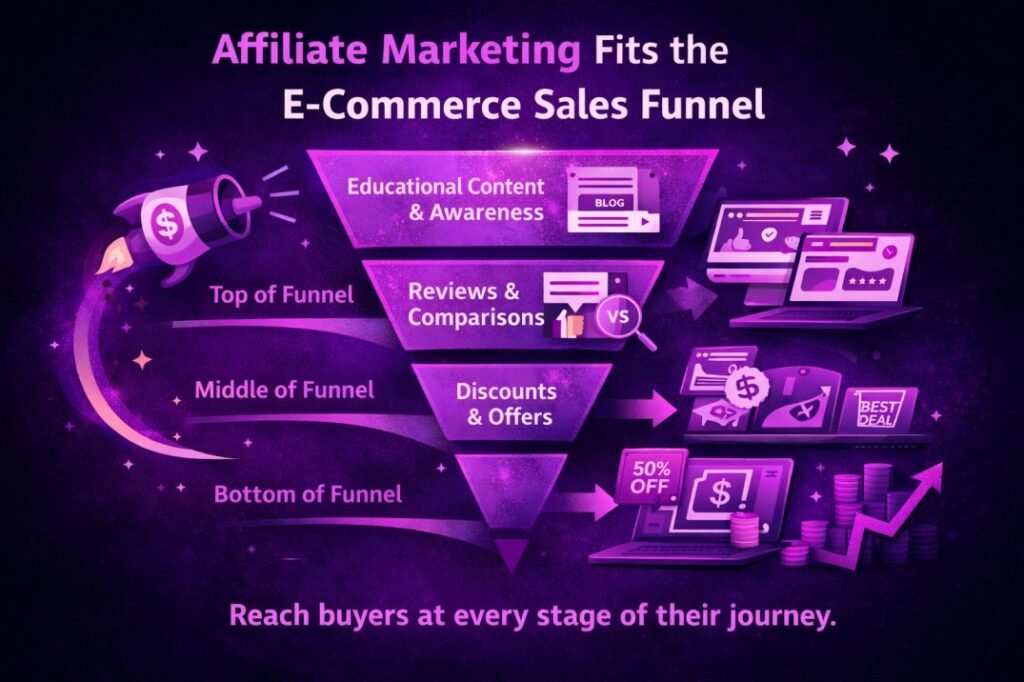
Affiliate marketing integrates naturally with the e-commerce sales funnel:
- Top of funnel: Educational blogs and awareness content introduce products.
- Middle of funnel: Reviews, comparisons, and tutorials build trust.
- Bottom of funnel: Discount pages, deal blogs, and recommendation posts drive conversions.
Instead of relying on a single traffic source, affiliate marketing allows e-commerce brands to diversify acquisition channels while maintaining control over costs and performance.
At Visiblica, we view affiliate marketing not as a standalone tactic, but as a strategic extension of your e-commerce growth engine, designed to compound results over time rather than deliver short-lived spikes.
Why Affiliate Marketing Works So Well for E-Commerce Businesses
Affiliate marketing isn’t effective for e-commerce by accident. It works because it aligns perfectly with how people actually discover, evaluate, and buy products online. Unlike traditional advertising models that rely on interruption, affiliate marketing integrates directly into the customer’s decision-making journey.
Here’s why e-commerce affiliate marketing continues to outperform many other digital channels.
Targeted Reach Without Wasted Traffic
One of the biggest challenges for online stores is attracting the right audience, not just more traffic. Affiliate marketing solves this by placing your products in front of people who are already interested in your category.
Affiliates typically operate within specific niches. Their audiences follow them for expertise, reviews, or recommendations related to a particular interest. When an affiliate promotes your product, it reaches users who are already primed to engage, compare, and buy. This makes affiliate marketing especially powerful for online stores selling niche or specialized products.
Instead of broadcasting ads to broad audiences, brands tap into focused communities where relevance drives results.
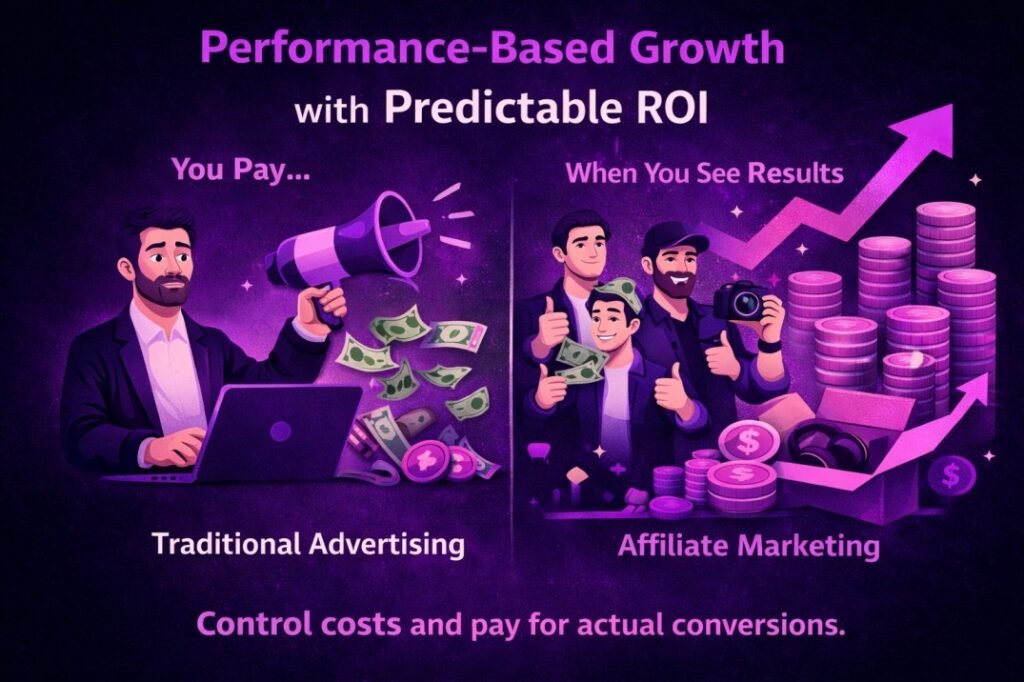
Performance-Based Growth with Predictable ROI
Traditional advertising often requires upfront spending with no guaranteed return. Affiliate marketing flips this model. In a well-structured e-commerce affiliate program, brands only pay when a measurable outcome occurs, usually a sale.
This performance-based structure allows businesses to:
- Control acquisition costs
- Scale partnerships without increasing risk
- Forecast revenue more accurately
Because commissions are tied directly to conversions, affiliate marketing naturally encourages efficiency. Every partner is incentivized to optimize their content, messaging, and traffic quality.
Built-In Trust Through Third-Party Endorsements
Modern consumers trust people more than ads. Affiliate marketing leverages this behavior by relying on third-party voices rather than brand-led promotion.
Reviews, tutorials, comparison articles, and recommendation videos feel organic because they are embedded in content users already consume. When an affiliate recommends a product, it carries the weight of their credibility, making the buying decision easier and faster.
This trust-driven dynamic is a major reason affiliate marketing for e-commerce often converts better than paid traffic alone.
Naturally Supports the Entire Buying Funnel
Affiliate marketing doesn’t operate at a single stage of the funnel. It supports the full customer journey.
- Awareness content introduces products to new audiences
- Educational content helps users evaluate options
- Comparison and review content pushes buyers toward a final decision
Because affiliates create diverse content types, brands benefit from coverage across multiple touchpoints without managing each interaction directly. This makes affiliate marketing one of the most flexible and scalable affiliate marketing strategies for e-commerce brands.
Scalable Growth Without Heavy Operational Load
Each affiliate functions like an independent sales channel. As your program grows, so does your reach, without the operational complexity of managing additional ad accounts or campaigns.
Strong affiliate ecosystems compound over time. High-performing partners continue driving sales month after month, making affiliate marketing a long-term asset rather than a short-term tactic.
At Visiblica, we’ve seen that e-commerce brands that treat affiliate partnerships as strategic relationships, not one-off promotions, consistently achieve more stable and sustainable growth.
The Real Challenges of Affiliate Marketing (And How E-Commerce Brands Solve Them)
Affiliate marketing is often described as a low-risk growth channel, but that doesn’t mean it’s effortless. Many e-commerce brands launch affiliate programs with high expectations, only to see slow traction or inconsistent results. The difference between failure and sustainable growth lies in how these challenges are handled.
Here are the most common obstacles in affiliate marketing and how successful e-commerce brands overcome them.
Finding the Right Affiliates, Not Just More Affiliates
One of the biggest mistakes brands make is prioritizing quantity over quality. Opening an affiliate program to anyone can attract low-quality publishers who generate poor traffic, misrepresent products, or add no real value.
The solution:
Successful brands focus on relevance and alignment. They actively recruit affiliates whose audience matches their ideal customer profile. Niche bloggers, product reviewers, and content creators with engaged audiences often outperform large but generic publishers.
A smaller, well-curated affiliate group almost always delivers better long-term results than a large, unmanaged network.
Loss of Control Over Brand Messaging
Once affiliates start promoting your products, you no longer control how every message is framed. Affiliates may emphasize features that don’t align with your brand positioning or publish content that conflicts with your values.
The solution:
Clear guidelines and ready-to-use promotional assets help maintain consistency. Providing affiliates with approved messaging, product highlights, and creative materials gives them direction without limiting authenticity.
Regular communication and periodic content reviews ensure your brand is represented accurately while preserving the affiliate’s voice.
Low-Quality Traffic and Poor Conversions
Not all traffic is equal. Some affiliates may drive clicks that look impressive but fail to convert into actual sales. This often happens when affiliates target the wrong audience or focus on volume rather than intent.
The solution:
Track performance beyond clicks. Monitor conversion rates, average order value, and revenue per affiliate. Over time, double down on partners who generate qualified traffic and phase out those who don’t.
Strong e-commerce affiliate programs prioritize buyer intent over raw traffic numbers.
Attribution and Tracking Issues
Accurate tracking is critical in affiliate marketing. Without reliable attribution, brands may overpay commissions, lose trust with affiliates, or misinterpret performance data.
The solution:
Use dependable affiliate tracking software that integrates smoothly with your e-commerce platform. Ensure tracking links, cookies, and reporting systems are properly configured and tested before scaling.
Transparent reporting builds confidence on both sides and allows data-driven optimization.
Compliance and Disclosure Risks
Affiliate marketing comes with legal responsibilities. In many regions, affiliates are required to disclose their relationship with brands. Failure to comply can expose businesses to regulatory risk and damage trust.
The solution:
Educate affiliates about disclosure requirements and include compliance guidelines in your affiliate agreement. Periodically review affiliate content to ensure disclosures are visible and compliant.
Brands that take compliance seriously protect both their reputation and their partners.
Managing and Motivating Affiliates Over Time
Affiliate relationships can lose momentum if left unattended. Affiliates may shift focus to other brands, stop promoting your products, or reduce content quality.
The solution:
Treat affiliates as partners, not channels. Share updates, offer performance incentives, provide exclusive promotions, and recognize top performers. Long-term engagement turns affiliates into brand advocates rather than passive promoters.
At Visiblica, we’ve found that e-commerce brands that actively manage and support their affiliates build stronger ecosystems and more predictable revenue streams.
How to Build a High-Converting Affiliate Program for E-Commerce
Building an affiliate program is easy. Building one that consistently drives revenue is not. High-performing e-commerce brands approach affiliate marketing as a structured growth system, not a side experiment.
Here’s how successful brands design affiliate marketing for e-commerce that actually converts.
Start with a Clear Affiliate Value Proposition
Before recruiting affiliates, your program must answer one simple question:
Why should someone promote your store instead of hundreds of others?
A strong value proposition goes beyond commission rates. It includes:
- Competitive and transparent payouts
- High-quality products with proven demand
- Reliable tracking and on-time payments
- Brand credibility that affiliates feel proud to associate with
When affiliates understand the upside clearly, they promote with confidence, not hesitation.
Choose the Right Affiliate Model for Your Online Store
Not every affiliate model works equally well for every store. E-commerce brands must align their affiliate strategy with their products, margins, and audience behavior.
Common models include:
- Content-based affiliates (blogs, niche websites, reviews)
- Influencers and creators with loyal communities
- Coupon and deal partners for high-intent buyers
- Comparison and recommendation platforms
The most effective affiliate marketing for e-commerce combines multiple models while keeping strict performance benchmarks.
Design Commission Structures That Encourage Sales Quality
A flat commission rate may look simple, but it doesn’t always reward the right behavior. High-converting programs incentivize value, not just volume.
Smart e-commerce affiliate programs often:
- Offer tiered commissions for higher performance
- Reward affiliates based on conversion quality or order value
- Introduce bonuses for new customer acquisition
This structure naturally filters out low-quality traffic and attracts partners focused on real revenue.
Provide Affiliates with Conversion-Optimized Assets
Affiliates can only perform as well as the tools you give them. Expecting them to create everything from scratch limits scalability.
High-converting programs provide:
- Pre-written product descriptions and key benefits
- Optimized landing pages aligned with search intent
- Banners, visuals, and product images
- Clear brand messaging and positioning guidelines
When affiliates have access to proven assets, affiliate marketing for e-commerce becomes faster, more consistent, and more measurable.
Use Reliable Tracking and Transparent Reporting
Trust is the foundation of every successful affiliate relationship. Inaccurate tracking breaks that trust instantly.
A strong program ensures:
- Accurate attribution across devices and channels
- Real-time performance dashboards
- Clear reporting on clicks, conversions, and commissions
Transparency doesn’t just protect affiliates. It allows e-commerce brands to optimize strategies based on real data, not assumptions.
Recruit Strategically, Not Passively
High-converting affiliate programs don’t wait for affiliates to find them. They actively recruit partners who already influence their target audience.
This includes:
- Outreach to niche bloggers and reviewers
- Partnerships with creators already discussing similar products
- Identifying competitors’ top-performing affiliates
Strategic recruitment is what transforms affiliate marketing for e-commerce from a passive channel into a predictable growth engine.
Continuously Optimize and Scale What Works
Launching an affiliate program is only the beginning. Optimization is where long-term success is built.
Top e-commerce brands regularly:
- Analyze affiliate performance by revenue, not clicks
- Test commission structures and promotional offers
- Double down on high-performing partners
- Remove underperforming or misaligned affiliates
Affiliate marketing rewards brands that treat it as a living system, not a static setup.
Advanced Affiliate Marketing Strategies for Scalable E-Commerce Growth
Once the foundation of affiliate marketing for e-commerce is in place, growth no longer comes from adding more affiliates. It comes from refining strategy, deepening partnerships, and aligning affiliate efforts with broader business goals.
High-performing e-commerce brands use advanced affiliate marketing strategies to unlock compounding growth rather than short-term spikes.
Segment Affiliates by Role and Intent
Not all affiliates contribute in the same way. Treating them equally limits performance and insight.
Advanced e-commerce affiliate programs segment partners based on their impact in the buying journey:
- Top-of-funnel affiliates focused on education and awareness
- Mid-funnel partners creating comparisons and detailed reviews
- Bottom-funnel affiliates capturing high-intent buyers
By understanding where each affiliate fits, brands can tailor commissions, messaging, and promotions to maximize effectiveness at every stage.
Align Affiliate Content with Search Intent
Affiliates are powerful organic traffic drivers when their content matches what users are actively searching for.
E-commerce brands that win at affiliate marketing:
- Guide affiliates toward informational, commercial, and transactional keywords
- Encourage long-form reviews, buying guides, and use-case content
- Support SEO-driven affiliate content that ranks independently
This approach allows affiliate marketing for e-commerce to complement in-house SEO rather than compete with it.
Offer Exclusive Promotions to Top Affiliates
Generic discount codes rarely create loyalty. Exclusivity does.
Advanced programs provide:
- Affiliate-specific offers
- Early access to promotions or launches
- Custom bundles or limited-time deals
These incentives give affiliates a unique angle and motivate them to prioritize your brand over competitors.
Leverage Influencer-Affiliate Hybrids
Influencers and affiliates no longer operate in separate lanes. The strongest e-commerce brands blend both into a single performance-driven model.
By offering influencers affiliate commissions instead of flat fees, brands:
- Reduce upfront marketing costs
- Pay only for actual results
- Build long-term partnerships rather than one-off campaigns
This hybrid approach is increasingly central to modern affiliate marketing for e-commerce growth.
Use Data to Identify and Scale Winning Partners
Advanced optimization comes from going deeper than surface metrics.
Top brands analyze:
- Revenue contribution per affiliate
- Conversion rates by traffic source
- Lifetime value of affiliate-referred customers
Data reveals which partners deserve higher commissions, more support, and deeper collaboration. Scaling these relationships often produces better ROI than recruiting new affiliates endlessly.
Integrate Affiliate Marketing with Other Channels
Affiliate marketing performs best when it’s not isolated.
E-commerce brands integrate affiliates with:
- Email marketing and remarketing funnels
- Product launches and seasonal campaigns
- Content marketing and SEO strategies
When affiliates amplify broader campaigns, affiliate marketing for e-commerce becomes a multiplier rather than a standalone channel.
Turn Top Affiliates into Strategic Brand Partners
At the highest level, affiliates stop being traffic sources and start becoming growth partners.
Advanced programs:
- Co-create content with top affiliates
- Involve partners in product feedback and launches
- Offer long-term incentives tied to performance milestones
This partnership mindset transforms affiliate marketing from a tactical channel into a sustainable competitive advantage.
Common Affiliate Marketing Mistakes E-Commerce Brands Must Avoid
Affiliate marketing for e-commerce is a powerful channel, but even experienced brands can stumble. Avoiding common mistakes can save time, money, and brand reputation while maximizing ROI.
Here are the top pitfalls and how to navigate them:
1. Choosing the Wrong Affiliates
Not every affiliate aligns with your audience or brand values. Partnering with the wrong influencers or bloggers can result in:
- Low-quality traffic
- Minimal conversions
- Misaligned messaging
Solution: Vet affiliates carefully. Ensure their content style, audience demographics, and values align with your e-commerce brand. Look for micro-influencers with highly engaged niche audiences—sometimes smaller partners outperform bigger names.
2. Ignoring Compliance and Disclosure Rules
Affiliates are legally required to disclose sponsored content under FTC guidelines. If affiliates fail to comply, your brand may face penalties.
Solution: Provide clear disclosure instructions and monitor affiliate content. Encourage transparency to protect your brand while maintaining trust with your audience.
3. Not Tracking Performance Properly
Without proper tracking, it’s impossible to know which affiliates are driving sales, clicks, or revenue. This can lead to misallocated budgets and missed growth opportunities.
Solution: Use advanced affiliate tracking software that integrates with your e-commerce store. Track conversions, click-through rates, and affiliate revenue to identify top performers and optimize campaigns.
4. Offering Generic or Uninspiring Promotions
Standard discounts or copy-pasted banners may fail to excite potential buyers. Affiliates need unique angles to motivate their audience.
Solution: Provide exclusive offers, personalized links, or limited-time promotions. Align these promotions with seasonal campaigns or trending products. Check out trends in the e-commerce industry for inspiration from trusted sources like YWS Technologies’ e-commerce trends blog.
5. Failing to Communicate and Support Affiliates
Affiliates need guidance to represent your products effectively. Lack of communication can lead to inconsistent messaging and poor performance.
Solution: Provide affiliates with marketing assets, product education, and regular updates. Maintain open channels to answer questions and receive feedback.
6. Overlooking the Customer Journey
Affiliate marketing is more than just clicks. If affiliates promote your product to audiences not ready to buy, you waste resources and miss conversions.
Solution: Segment affiliates based on audience intent (awareness, research, purchase) and provide tailored campaigns to guide prospects through the buying journey.
7. Ignoring Analytics for Continuous Improvement
Many e-commerce brands fail to optimize their affiliate programs due to neglecting data. Performance stagnates without insights.
Solution: Regularly analyze affiliate performance data. Identify trends, top-performing partners, and underperforming campaigns. Use this insight to refine your strategy continuously.
Key Takeaway:
Affiliate marketing for e-commerce can skyrocket growth, but only if brands avoid common mistakes like misaligned affiliates, poor tracking, or uninspiring promotions. Combining best practices with data-driven insights ensures your program remains profitable and scalable.
FAQs About Affiliate Marketing for E-Commerce
1. What is affiliate marketing for e-commerce and how does it work?
Affiliate marketing for e-commerce is a performance-based strategy where online stores partner with affiliates to promote products. Affiliates earn a commission for every sale or lead generated through their unique tracking links. This helps e-commerce businesses expand reach, increase sales, and tap into new audiences without upfront advertising costs.
2. How do I start an affiliate marketing program for my online store?
To start an affiliate program for your e-commerce store:
- Identify your target audience and top-selling products.
- Choose an affiliate tracking platform or network.
- Recruit affiliates who align with your niche.
- Provide affiliates with marketing materials, links, and clear commission structures.
- Monitor performance and optimize campaigns for conversions.
3. What are the benefits of e-commerce affiliate programs?
E-commerce affiliate programs can:
- Expand reach to targeted audiences.
- Reduce marketing costs since you pay only for results.
- Build trust through third-party endorsements.
- Introduce your products to niche markets or micro-influencer communities.
4. How can I find the best affiliates for my online store?
Look for affiliates who:
- Have audiences matching your target market.
- Produce high-quality content related to your products.
- Demonstrate engagement through comments, shares, and clicks.
- Show long-term consistency and reliability.
Micro-influencers or niche bloggers often deliver higher conversion rates than broad-reach influencers.
5. What common mistakes should e-commerce brands avoid in affiliate marketing?
Common mistakes include:
- Choosing affiliates misaligned with your brand.
- Neglecting FTC compliance and disclosures.
- Failing to track performance or optimize campaigns.
- Providing generic promotions or poor support to affiliates.
Avoiding these mistakes ensures your affiliate program scales profitably.
6. How do I measure the success of my affiliate marketing campaigns?
Track metrics like:
- Affiliate-generated sales and revenue.
- Click-through rates and conversion rates.
- Average order value from affiliate traffic.
- ROI and lifetime value of referred customers.
Advanced tracking tools provide insights into which affiliates and campaigns drive the best results.
7. Can affiliate marketing help me reach new markets for my e-commerce business?
Yes. By partnering with affiliates who serve niche or untapped audiences, your e-commerce store can reach new segments. For example, a DJ equipment brand might connect with wedding DJs, house party DJs, or online music communities to expand its customer base.
8. Which affiliate marketing strategies work best for e-commerce growth?
Effective strategies include:
- Offering exclusive discounts and limited-time promotions.
- Collaborating with micro-niche influencers.
- Running flash campaigns or seasonal initiatives.
- Providing high-quality content and tutorials through affiliates.
- Using analytics to refine campaigns continuously.
9. How do I ensure affiliates comply with legal and brand guidelines?
Provide clear affiliate agreements covering:
- FTC disclosure requirements.
- Brand messaging and content guidelines.
- Commission rules and payment schedules.
- Expectations for affiliate performance and reporting.
Regular monitoring and communication help maintain compliance and protect your brand reputation.
Conclusion
Affiliate marketing for e-commerce is more than just a sales channel. It’s a powerful growth engine. By partnering with affiliates who share your brand’s values and target audience, your online store can reach new customers, increase conversions, and maximize ROI without excessive upfront costs.
The key to a successful e-commerce affiliate program lies in strategy, careful selection of partners, and continuous optimization. From building strong relationships with affiliates to leveraging advanced marketing tactics, your program can evolve into a long-term asset that drives sustainable growth.
If you’re serious about scaling your online store, now is the time to take action. Start by recruiting the right affiliates, providing them with high-quality promotional materials, and tracking their performance using reliable affiliate software. Remember, every affiliate you onboard becomes a trusted advocate for your brand, amplifying your reach and credibility.
Take the Next Step:
Ready to grow your e-commerce business with affiliate marketing? Launch your affiliate program today, experiment with advanced strategies, and watch your sales soar.